Labels across the food, drink, cosmetics, and herbal products industries claim to be
using “adaptogens.” This term is trending in the zeitgeist as general herbs that “must
be good for us.” But what do we really know about these herbs, and is there good science
behind them?
According to clinical herbalist, educator, and ethnobotanist David Winston, the answer is
yes. David is one of the leading voices in communicating what science knows about adaptogens.
The science behind adaptogens is evolving, and understanding it is crucial, especially for
product formulators who want to use these herbs responsibly. Winston’s book, Adaptogens:
Herbs for Strength, Stamina and Stress Relief, is an amalgamation of reliable studies about
adaptogens, what they are, how they work, and why.
I recently interviewed David about this topic and asked him to highlight what people should
know about adaptogens
to help them make educated decisions when using them in products and other applications. He had
clear and usable advice for us.
What Are Adaptogens, Really? A Scientific Definition
One of Winston’s primary concerns is the misuse of the term “adaptogen.” Because it’s currently
a trending topic, companies and individuals are claiming their products contain these herbs, but
in fact have no true adaptogen herbs present. “One of the things that prompted me to write
the book on adaptogens is that I got tired of people misusing the term. When I saw an article
claiming cranberries were an adaptogen, I was like, ‘That's it. I'm writing a book.’”
Additionally, the claim that adaptogens have been around “historically” was another spur for Winston.
He says the herbs themselves have been around for ages and have long histories of use in traditional
systems of medicine, such as TCM
traditional Chinese medicine
and Ayurveda, but the terms “adaptogen” and “adaptogenic” were coined around 1947 as a newly developing
idea in the Soviet Union.
Definition (1969, Soviet Research):
The Soviets’ interest in studying herbs started with the desire to find an alternative to the amphetamines
they were giving their soldiers, cosmonauts, and workers.
By 1969, the leading researchers, Dr. Lasseroff and Dr. Breckman had created the term “adaptogen” and published
the first definition and criteria by which an adaptogen is determined:
1. The herb is non-toxic in therapeutic doses
2. It creates a nonspecific state of resistance to stress regardless of the source of the stress
3. They create an amphoteric effect in the body, meaning they help normalize overall body function
“Now, that was a good stab at an initial definition,” says Winston. “The problem is that many people in the media,
many people in the research community, many people in the industry are still using this initial definition from 1969.
In the intervening 56 years, there has been more research, and we now know more about adaptogens. So, while that
initial definition still stands, meaning an herb has to fit all three of those parameters, we also know that there
are many herbs that might fit those three parameters that are not adaptogens.”
How Adaptogens Work in the Body
In the late 1990s, Swedish doctor Alexander Panossian and German pharmacognosist Hildibert Wagner released
several studies
showing that adaptogens function primarily through two “master control systems”:
1. The HPA Axis – regulates stress hormones like cortisol
2. The Sympathoadrenal System (SAS) – the fight-or-flight response
“The reality is that it is very unlikely that any herb affects the SAS without affecting the HPA axis,” explains Winston.
“In order for an herb to be an adaptogen, it has to be working through those control systems.” He goes on to explain that
some herbs like astragalus, which he included as a possible adaptogen in his first book, turn out not to be an adaptogen
at all because they don’t work through any of those mechanisms.
Later research (2008–2012, Panossian & Wagner) showed that adaptogens not only work through the HPA axis and/or the SAS,
but they also work on a cellular level.
Well-Researched Adaptogenic Herbs
Winston, only a handful of herbs have strong scientific evidence as true adaptogens:
| Herb |
Notes |
| Asian ginseng (red or white) |
Stimulating, nourishing |
| American ginseng |
Calming, immune-supportive |
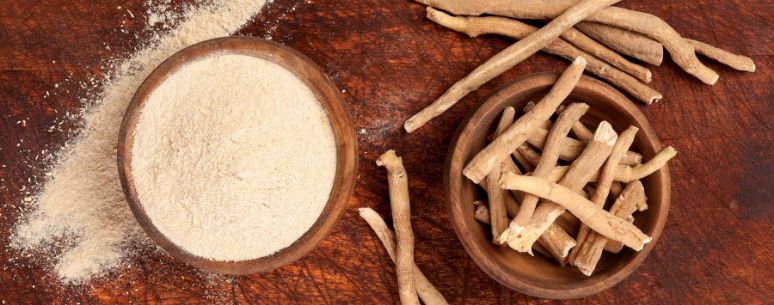
| Ashwagandha |
Calming, stimulates thyroid |
| Schisandra |
Calming, strong flavor |
| Rhodiola |
Stimulating, drying |
| Eleuthero |
Classic adaptogen, stress resistance |
| Cordyceps |
Traditionally used in foods, stamina support |
| Rhaponticum (Russian herb) |
Research-supported |
| Shilajit |
Mineral-rich, adaptogenic effects |
Probable Adaptogens:
There is some evidence that suggests these herbs are adaptogens, but it is not as strong as the well-researched herbs:
Possible Adaptogens:
Theoretically, these herbs could be adaptogens, but the evidence is incredibly poor. Dang Shen (Codonopsis),
Manchurian Aralia, Prince Seng,
Reishi,
Maca,
Jiaogulan,
Horny Goat Weed,
Guduchi are some of the herbs considered possible adaptogens.
Common Misconceptions About Adaptogens
1. Adaptogens aren’t historical in the sense of the term itself. Adaptogens are a
modern scientific concept that does not come out of traditional medicine.
2. “Adaptogenic compounds” is a false marketing term.
3. Not all herbs labeled adaptogenic actually meet the criteria.
4. Not all adaptogens are for every person.
“We abuse our terminology, then our terminology becomes meaningless,” Winston explains. “You can defraud your
customers if you claim something is adaptogenic when it isn’t.”
Considerations for Product Formulators
Key takeaways for safe and effective formulation:
- Use true adaptogens with research-backed benefits
- Consider individual variability and contraindications
- Avoid over-hyped or misused herbs
- If you are formulating for functional foods, snacks or beverages, consider adaptogens that have
historical culinary use like cordyceps or ashwagandha.
The Science Continues to Evolve
Adaptogen research is ongoing, with studies funded in countries like China, India, South Korea, Japan, and
Germany. Clinical data continues to refine which herbs truly qualify as adaptogens, how they interact with stress
pathways, and their cellular-level mechanisms.
Quality research references for formulators:
-
Dr. Panossian,
currently the world’s top researcher around the
subject of adaptogens.
-
The book, “Adaptogens - Herbs for Strength, Stamina and Stress Relief”
by, clinical herbalist David Winston and researcher Steven Maimes provides a comprehensive look at adaptogens, exploring
the latest scientific research and detailing the origin, traditional and clinical uses, actions, properties, preparation,
and dosage for each herb.
If you want to use adaptogens in your products, do your homework and make sure you’re using true adaptogenic herbs
in an appropriate way for the application.

Key Takeaways for Readers and Formulators
1. True adaptogens are rare. Only 8–9 herbs are well-researched.
2. Not everyone needs adaptogens. Young, healthy, low-stress individuals may not benefit.
3. Adaptogens are not one-size-fits-all. Consider energizing vs calming properties and contraindication.
4. Marketing claims can be misleading. Ensure accuracy in labeling.
5. Incorporate wisely in products. Use scientifically-backed herbs that are appropriate for the specific application.
FAQ
Q: What is an adaptogen?
A: An adaptogen is a non-toxic herb that helps the body resist stress, normalizes physiological function, and has been scientifically shown to
affect stress-related systems.
Q: Which herbs are confirmed adaptogens?
A: Asian ginseng, American ginseng, Ashwagandha, Schisandra, Rhodiola, Eleuthero, Cordyceps, Raponticum, and Shilajit.
Q: Can adaptogens be added to food and beverages?
A: Yes, but only certain herbs that have a history as functional foods. Many adaptogens are better suited for supplements
and or teas rather than processed foods.
Q: Are adaptogens safe for everyone?
A: Generally yes at therapeutic doses, but some herbs can be stimulating or contraindicated depending on
individual health conditions.
Explore our bulk adaptogenic herbs for safe and research-backed formulations.