The Shift Shaping Summer Menus
As summer menus shift toward refreshment, function, and experience, botanical ingredients are moving from niche to
necessary. Today’s consumers are looking for beverages that feel elevated but approachable—flavor forward, visually
engaging, and often alcohol-free.
For beverage developers, this creates an opportunity: herbal and botanical ingredients offer differentiation
without requiring entirely new formats. Instead, they layer into familiar builds: iced lattes, lemonades, sodas,
and mocktails - bringing nuance, color, and storytelling.
Why Botanicals Are Driving Summer Menus
Across foodservice and retail, several patterns are shaping seasonal beverage innovation:
Botanicals uniquely meet all three, making them especially valuable for summer menu development. Translating these
trends into application, the following concepts offer a starting point for building seasonal, botanical-forward
beverage programs that feature diverse and exciting herbal ingredients and combinations.
Trend Direction 1: Elevated Citrus & Herbal Lemonades
Lemonade continues to evolve beyond its classic form, acting as a base for layered herbal and botanical profiles.
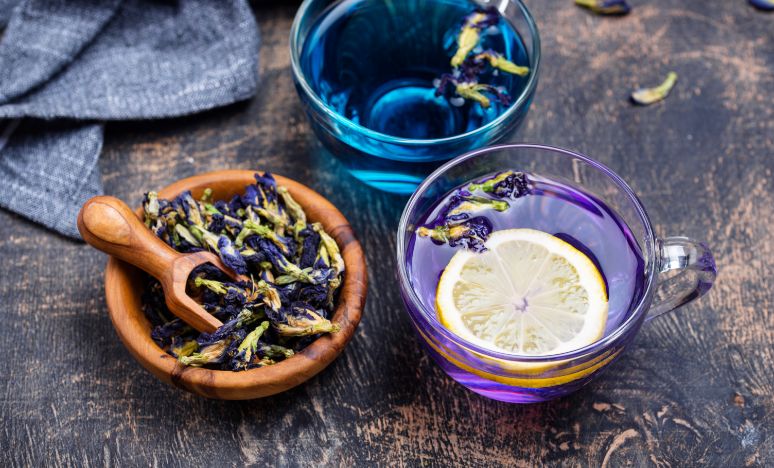
Featured Concept: Butterfly Pea Flower Arnold Palmer
A visually striking, interactive take on a familiar format:
- Black or green tea blend base
-
Butterfly Pea Flower infusion for vibrant
blue color
- Lemonade side car or added tableside for a color-changing effect
Why it works:
- Delivers a moment (color transformation)
- Keeps flavors approachable while introducing novelty
- Encourages customization (sparkling option, tropical or floral add-ons)
-
Endless flavor customization options
- Elderflower for softness and aroma
- Lavender for a more premium, spa-like profile
- Citrus peel blends for complexity
Application tip: Offer as a build-your-own format: still or sparkling, with optional botanical add-ins to increase
perceived value.
Trend Direction 2: Botanical Sodas & Cream-Topped Refreshers
House-made sodas are gaining traction as operators look for margin-friendly, customizable beverages.
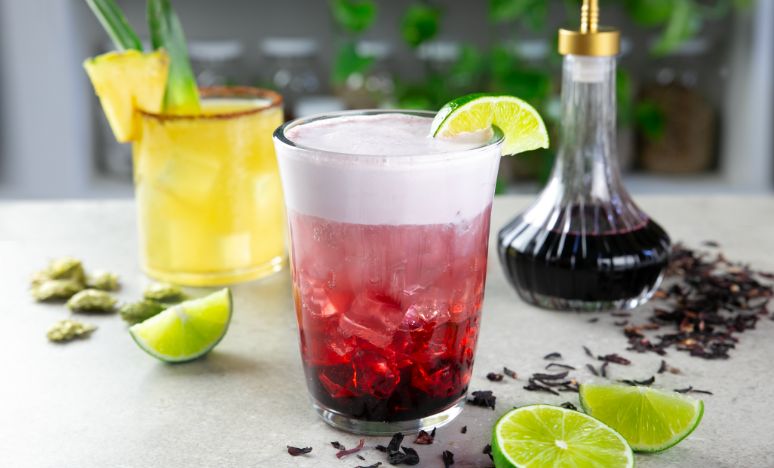
Featured Concept: Hibiscus Soda with Coconut Foam
- Hibiscus simple syrup as the base
- Sparkling water for brightness
- Pink coconut foam for texture and visual contrast
Hibiscus Soda with Coconut Foam Recipe
Hibiscus Simple Syrup Ingredients (x4 for larger 5–6 cup batch):
Instructions:
Combine ¼ cup hibiscus, 1 cup sugar and 1 cup of water in a saucepan. Cook on medium heat, stirring until sugar
dissolves. Turn off heat and let the mixture steep for 15 minutes. Strain into a glass jar or bottle and let cool.
Build the Mocktail
- Fill a highball glass with ice
- Fill about ¼ of the glass with Hibiscus Simple Syrup
- Fill with soda water, leaving about ¼ of the glass empty for the coconut foam
- In a separate cup, combine 3 Tbs of coconut cream with a tsp of hibiscus simple syrup and froth until it thickens
- Carefully pour the coconut cream foam to top off the hibiscus soda
- Garnish with fresh mint leaves or a lime wheel and serve
Why it works:
- Hibiscus delivers tartness similar to berry or citrus, but with a more distinctive identity
- The layered foam adds indulgence without heaviness
- Visually aligned with social and seasonal aesthetics
-
Variations:
- Add ginger for warmth and depth
-
Pair with citrus peels for a more
structured flavor profile
Application tip: Batch hibiscus syrup for cross-use in lemonades, mocktails, and iced teas to streamline
operations.
Trend Direction 3: Two Takes on Herbal Mocktails with Culinary Depth
Mocktails are evolving beyond “alcohol-free cocktails” into their own category, often drawing from culinary and
functional inspiration. This shift aligns with broader industry movement, as botanical and herb-forward flavors
continue to gain traction on menus.
Concept 1: Herba-Rita
A botanical-forward, savory-leaning refresher:
Why it works:
- Combines bitter, spicy, and tropical elements - mirroring complexity typically found in cocktails
- Appeals to consumers seeking less sweetness
- Bridges familiarity with innovation
Application tip: Highlight the ingredient story–hops, ginger, and tropical fruit create a narrative that resonates
with both craft beverage and wellness audiences.
Concept 2: Yerba-Rita
A zero-proof take on a margarita-inspired refresher:
- Yerba Mate base
- Lime juice, lemon juice and orange for tart, citrus flavor
-
Fine salt or Himalayan Pink
Salted rim for contrast
Why it works:
- Yerba mate brings earthy depth
- Lime, lemon and orange create a bright, layered acidity to balance botanical base
- Salted rim adds contrast and enhances the citrus notes
Application tip: Use as a seasonal mocktail where menus need refreshing, functional, and more adventurous than a
standard margarita-inspired build.
For more beverage and mocktail inspiration, explore our
Herbal Insights:
Trend Direction 4: Botanical Iced Lattes & Cream-Forward Builds
As botanical flavors continue to expand across beverage categories, iced lattes offer a natural entry point,
combining familiarity with subtle, differentiated flavor.
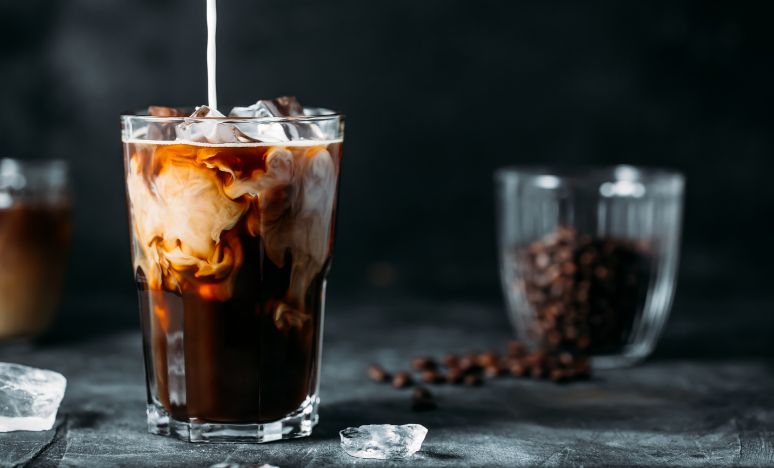
Featured Concept: Iced Citrus Botanical Latte
A brighter, summer-forward direction
-
Cold brew or tea base (black or
rooibos)
-
Elderflower or citrus peel infusion
- Light milk or coconut milk
- Optional vanilla or date syrup for balance
Why it works:
- Bridges coffee, tea, and botanical flavor spaces
- Citrus + floral keeps the drink refreshing, not heavy
- Appeals to consumers seeking less traditional coffee flavors
Application tips: Keep botanical intensity subtle; these are accent flavors, not dominant notes. Cross-utilize
syrups (lavender, elderflower, citrus) across lattes, lemonades, and mocktails
Key Botanical Ingredients to Watch This Summer
For developers looking to expand or refine their menus, these botanicals offer both versatility and consumer
appeal:
Bringing Herbs & Botanicals to Your Summer Menu
Botanical beverages don’t require full menu overhaul. Instead, they offer a flexible way to refresh existing
formats, introduce seasonal LTOs, and create higher-margin, premium-feeling options.
With botanical and floral flavors still showing growth on menus, the opportunity lies in combining familiar
formats with unexpected botanical depth.
For beverage developers, the takeaway is clear: summer
menus are no longer just about refreshment–they’re about exploration, experience, and elevated simplicity.
As beverage innovation continues to evolve, the right botanical ingredients can help brands create drinks that
stand out in flavor, function, and consumer appeal.
Connect with Monterey Bay Herb Co. to explore
herbal and botanical solutions for mocktails, functional beverages, cocktails, and next-generation drink concepts.
FAQs
What are botanical beverages?
Botanical beverages are drinks infused or flavored with plant-based ingredients — flowers, herbs, roots, and peels
— such as hibiscus, lavender, elderflower, ginger, or butterfly pea flower. They range from lemonades and sodas to
mocktails and lattes, and are valued for their distinctive flavor, visual appeal, and functional associations.
Why are botanical flavors trending in summer drinks?
Botanical ingredients align with several converging consumer trends: the growth of the sober-curious movement,
demand for elevated non-alcoholic options, interest in functional ingredients, and appetite for multi-sensory,
visually engaging beverages. Summer menus in particular benefit from botanicals because they offer refreshment
alongside novelty and storytelling.
What are the best botanical ingredients for summer beverage menus?
The most versatile and on-trend botanicals for summer 2026 include hibiscus (tart, vibrant, highly adaptable),
butterfly pea flower (striking color-changing visual effect), elderflower (delicate and premium-feeling), lavender
(floral and increasingly mainstream), ginger (familiar and functional), and citrus peels (foundational for balance
and complexity).
How do you use butterfly pea flowers in drinks?
Butterfly pea flower is typically brewed as a tea or made into a simple syrup, producing a deep blue-purple
infusion. When combined with an acidic ingredient like lemon juice or lemonade, it shifts color dramatically — from
blue to pink or purple — creating a visual moment that's highly shareable and memorable for guests.
What is a botanical mocktail?
A botanical mocktail is a non-alcoholic drink that draws complexity from herb, flower, and plant-based ingredients
rather than spirits. Unlike simple juice-based drinks, botanical mocktails use ingredients like hops, ginger,
hibiscus, or citrus peels to deliver the layered, nuanced flavor profile typically associated with craft."