What You’ll Find in This Article
- What to look for when sourcing food-grade lavender
- Why ingredient quality, consistency, and format matter
- How lavender varieties can fit different product applications
- Ways to use lavender across food and beverage formulations
- Considerations for responsible lavender sourcing
Lavender is a familiar botanical, but sourcing the right lavender for food or beverage application requires more than simply finding dried flowers. Quality, food-grade specifications, availability, and the right ingredient format all matter when a botanical needs to perform consistently from product development through production.
Monterey Bay Herb Co. offers seven lavender options, giving product developers flexibility to choose the ingredient that best fits their formulation and product requirements. Our long-standing sourcing relationships also help us provide consistent availability and low minimum order quantities.
Why Lavender?
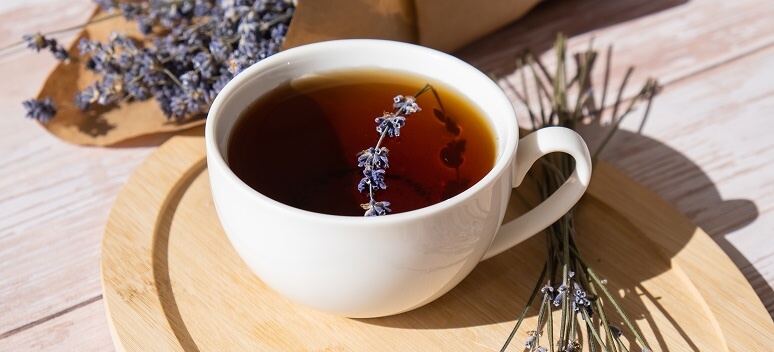
Lavender isn’t exactly a new flavor. Consumers already recognize it from teas, lattes, baked goods, cocktails, and other familiar applications. As product creators look for ingredients that can bring together flavor, wellness-inspired positioning, and consumer interest in products perceived as more natural or better-for-you, lavender offers an interesting balance of the familiar and the new. It can add a recognizable botanical story while opening the door to experimentation with different flavor combinations, formats, and applications. For formulators looking beyond the usual ingredients, lavender can be a way to introduce something distinctive without venturing too far outside what consumers already know.
What to Consider When Sourcing Lavender
Food Grade Matters
Not all lavender products are intended for culinary use. Essential oils and other highly concentrated lavender products are very different from whole dried lavender flowers and should not be treated as interchangeable ingredients.
For food and beverage formulation, sourcing a food-grade ingredient appropriate for the intended application is an important first step. Monterey Bay Herb Co. offers whole dried flowers in both organic and conventional options, providing flexibility for different product formulations and sourcing requirements.
Consistency Matters
Once an ingredient becomes part of a formulation, sourcing it consistently becomes just as important as finding it in the first place.
Variations in an ingredient can affect flavor, aroma, appearance, and ultimately the finished product. Reliable sourcing relationships give product developers greater confidence that an ingredient will be available when it's needed, whether they’re working through initial formulations or scaling an established product.
The Right Format Matters
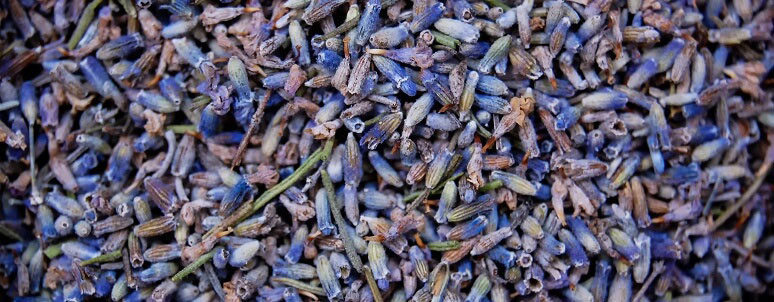
How lavender is processed can influence how it works in a finished product. Whole dried flowers are particularly versatile for applications like teas, infusions, syrups, and other preparations where the botanical itself is part of the process.
For applications that require a different particle size or blend, our Milling and Blending capabilities can help tailor an ingredient to a specific formulation.
Lavender varieties matter, too. Not all lavender looks or performs exactly the same. We offer several lavender options, including Ultra, with a strong blue color, giving product developers the ability to select an ingredient based on the desired color, appearance, and application.
Choosing the appropriate ingredient format at the sourcing stage can make formulation and production easier down the road.
Lavender Applications: From Standalone Flavor to Layered Botanical
The Lavender Products market is expected to grow at a CAGR of 8.7% from 2026 to 2033. One reason lavender continues to attract interest from product developers is its versatility. Consumers are already familiar with lavender in formats like lattes, teas, baked goods and cocktails, but there are countless ways to incorporate it into new products and flavor profiles.
Botanicals are also finding applications well beyond traditional tea and herbal products, with floral and botanical beverages appearing across beverages, baking, desserts, confectionery, and other food and beverage categories. A recent look at the botanical flavor trend from Specialty Food Magazine highlights lavender alongside chamomile, hibiscus, rose, and jasmine as botanicals with distinctive flavors and broad application appeal.
Lavender can be used as a more prominent flavor or as one component of a layered profile, pairing with other botanicals and familiar ingredients to create something nuanced and new.
Rather than treating florals as a standalone ingredient, formulators are increasingly layering botanicals and complementary flavors to create more nuanced experiences. Lavender is well suited to this approach. Its floral character can be prominent, but it can also provide one layer within a broader flavor profile.
Beverages: Floral flavors are showing up across beverage categories, making lavender a natural fit for continued experimentation. It can be infused into simple syrups for cocktails, mocktails, lemonades, and sparkling beverages or incorporated into teas, lattes, and RTD products. It pairs beautifully with citrus, berries, honey, herbs, and other botanicals.
Sensory-focused formulations: Flavor is increasingly more than taste alone. Innova Market Insights’ 2026 U.S. flavor trends identified ‘Sensorial Explorations’ as a leading direction, highlighting the role of aroma, texture, and appearance in how consumers experience food and beverages. Lavender is an easy win here, as its floral aroma and flavor can contribute to the experience beyond just a flavor profile.
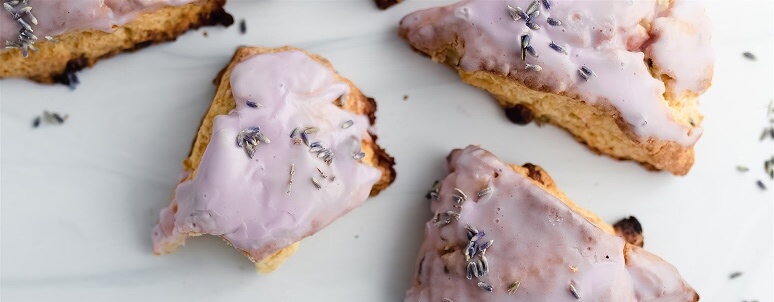
Bakery & Confectionery: Lavender can add subtle floral notes to cakes, cookies, shortbread, frostings, chocolates, and other confections. Pairing it with familiar ingredients like honey, vanilla, citrus, or chocolate can create a more nuanced profile. From a lavender-kissed shortbread to cardamom folded into laminated dough, culinary botanicals are becoming a way to elevate bakery and cafe menus.
Botanical & Functional Beverages: It can be incorporated into tea blends, botanical beverages, and functional drink formulations alongside ingredients selected for their intended benefits or positioning. Lavender’s familiarity can also help make more complex botanical formulations approachable to consumers.
Culinary Blends: Lavender can also move in a savory direction, incorporated into herbal and spice blends like the traditional Herbs de Provence, or paired with garlic and other herbs for seasonings for meats, vegetables, and roasted potatoes.
The possibilities extend well beyond those examples. Lavender can be the recognizable flavor consumers expect, a subtle accent within a layered botanical profile, or one element of a larger story. That versatility is part of what makes it such a useful ingredient for product developers looking to build something familiar but unique.
Category
Example Use
Pairs Well With
Beverages
Simple syrups, lattes, RTD functional beverages, lemonades
Citrus, berries, honey
Bakery/Confectionery
Shortbread, frosting, chocolates
Vanilla, citrus, chocolate
Culinary blends
Herbs de Provence, savory seasonings
Garlic, herbs, black pepper
Sourcing Lavender for Your Next Product
Whether you’re experimenting with a new functional beverage, adding a floral note to a baked good, or developing a botanical tea blend, the quality of the starting ingredient matters.
Monterey Bay Herb Co. offers low minimum order quantities and an extensive library of herbs, botanicals, and spices, making it easier to experiment with new ingredients without committing to large volumes. Our sourcing relationships help provide the quality and consistent availability product developers need as an idea moves from the test kitchen to production.
Exploring lavender for a new product? With multiple lavender varieties, organic and conventional options, and low minimum order quantities, Herb Co. makes it easier to find the right ingredient for your application.
FAQs
Where can I buy food-grade lavender in bulk?
Food-grade lavender can be sourced in bulk from botanical ingredient suppliers that offer appropriate specifications, consistent supply, and quantities suited to product development and production. Monterey Bay Herb Co. offers multiple lavender options, including organic and conventional whole dried flowers, with low minimum order quantities.
Is lavender trending on restaurant and cafe menus?
Yes. Lavender is part of a broader floral and botanical flavor trend showing up across beverages, baking, desserts, and confectionery, alongside botanicals like chamomile, hibiscus, rose, and jasmine. It's increasingly used as a layered flavor note rather than a standalone offering, appearing in lattes, cold foams, simple syrups, baked goods, and savory blends as product developers and menu creators look for ways to combine familiar flavor with a more distinctive botanical positioning.
Is all dried lavender suitable for food and beverage applications?
No. Lavender products can vary in how they are processed and intended to be used. When developing food or beverage products, source an ingredient specifically intended and appropriate for culinary or food-grade applications rather than assuming all dried lavender products are interchangeable.
What form of lavender is best for food and beverage formulation?
The best form depends on the application. Whole dried lavender flowers can work well for teas, infusions, syrups, and preparations where the botanical is part of the process, while milling can provide a different particle size for blends and other formulations.
What’s the difference between culinary lavender and essential oil lavender?
Culinary lavender, such as dried lavender flowers, is processed and intended for food and beverage use, while lavender essential oil is a highly concentrated extract typically intended for aromatic or topical applications, not ingestion. The two are not interchangeable. When sourcing lavender for a food or beverage product, it’s important to select a food-grade ingredient specifically intended for culinary formulation rather than assuming all lavender products have the same purpose.
How much lavender should I order to test a new formulation?
Order quantities for early-stage formulation testing are typically much smaller than production volumes, and working with a supplier that offers low minimum order quantities makes it easier to experiment before committing to larger runs. Monterey Bay Herb Co. offers low MOQs across its lavender options, allowing product developers to test formulations at a smaller scale and gain confidence in an ingredient before scaling production.
What should I look for when sourcing lavender for food and beverage products?
Look for a food-grade lavender ingredient that is appropriate for the intended application, with consistent quality, reliable availability, and the right format or particle size for your formulation. Organic or conventional sourcing, documentation, and supplier relationships may also factor into the decision.
What flavors pair well with lavender?
Lavender can be paired with familiar ingredients such as citrus, berries, honey, vanilla, chocolate, and other herbs and botanicals. These combinations can help balance lavender’s distinctive floral character and create more layered flavor profiles.

Marketer | Brand & Growth Strategist
Lucy Howell is a brand strategist and communications consultant who helps organizations turn ideas into action through customer insight, brand strategy, and strategic communications. Her experience spans food, beverage, agriculture, and natural products and beyond, helping teams clarify their vision, align priorities, and move initiatives from concept through execution. Outside of her client work, Lucy is a longtime gardener and native plant enthusiast passionate about food systems and environmental stewardship, including co-founding a local school garden initiative and serving on her local watershed committee.