shopping Gentian - all 3 varieties | shop organic only
[ 4300 ]Gentiana luteaORG

Gentian Root Cut & Sifted, Organic

1/4 Pound:  $12.02 Pound:  $26.72  100+ Pounds:  contact
[ 411 ]Gentiana lutea

Gentian Root Cut & Sifted, Wild Crafted

1/4 Pound:  $11.40 Pound:  $25.33  100+ Pounds:  contact
[ 4513 ]Gentiana lutea

Gentian Root Powder

1/4 Pound:  $12.59 Pound:  $27.98  100+ Pounds:  contact
We offer discounted pricing on orders over 100 pounds. Contact Us

Wholesale Gentian

Gentiana lutea
plant overview
a standard in herbal bitters

There are more than 150 species of gentians, the majority of which favor mountainous regions in various parts of the world. Gentiana lutea, more commonly referred to as yellow gentian, is specific to the Pyrenees and Alpines of Europe. The long, thick, yellow-brown root is harvested for its bitter principles. At one time, yellow gentian was used in beer brewing. Along with sweet flag, the root is a component of the famous Stockton herbal bitters. A simple, DIY formula consists of brandy infused with dried gentian root, orange peel and crushed cardamom pods.

Clicking "learn more" next to each variety will take you to individual product pages for details.

01.
A Bit of Botany

a little botanical information about gentian

description
Gentiana lutea is a member of the Gentianaceae family. It is a herbaceous perennial plant, growing to 1–2 m tall, with broad lanceolate to elliptic leaves 10–30 cm long and 4–12 cm broad. The flowers are yellow, with the corolla separated nearly to the base into 5-7 narrow petals. The root is long and thick, generally about a foot long and an inch in diameter, but sometimes even a yard or more long and 2 inches in diameter, of a yellowish-brown color and a very bitter taste. The stem grows 3 or 4 feet high or more, with a pair of leaves opposite to one another, at each joint. The lowest leaves have short foot-stalks, but the upper ones are stalkless, their bases almost embracing the stem. They are yellowish-green in color, oblong in shape and pointed, rather stiff, with five prominent veins on the underside, and diminish gradually in size as they grow up the stem. The large flowers are in whorls in the axils of the uppermost few pairs of leaves, forming big orange-yellow clusters. The corollas are wheel-shaped, usually five-cleft, 2 inches across, sometimes marked with rows of small brown spots, giving a red tinge to the otherwise deep yellow. Seeds in abundance are produced by strong plants, and stock is easily raised from them.

common names & nomenclature
The name of the genus is derived from Gentius, an ancient King of Illyria (180-167 B.C.) who is believed to have used the herb as a tonic.

Also known as:
yellow gentian, great yellow gentian, wild gentian, bitter root, bitterwort, devil’s taint
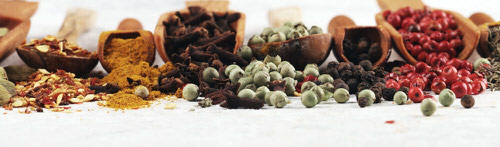
Gentian, a standard in herbal bitters

02.
Where in the World

habitat and range for gentian

Yellow Gentian is a native of the Alpine and sub-alpine pastures of central and southern Europe, frequent in the mountains of Spain and Portugal, the Pyrenees, Sardinia and Corsica, the Apennines, the Mountains of Auvergne, the Jura, the lower slopes of the Vosges, the Black Forest and throughout the chain of the Alps as far as Bosnia and the Balkan States.

03.
Cultivation & Harvesting

considerations for growing and harvesting gentian

climate
Gentian grows in grassy alpine and sub-alpine pastures in full sun to part shade.

soil
Prefers lime soils that are moist and well-drained.

growing
Sow gentian seed as soon as it is ripe in a cold frame or greenhouse. It can also be sown in late winter or early spring but the seed germinates best if given a period of cold stratification and quickly loses viability when stored, with older seed germinating slowly. The seed should be surface-sown, or only covered with a very light covering of compost. The seed requires dark for germination, so the pots should be covered with something like newspaper or be kept in a dark location. When large enough to handle, transplant seedlings to individual pots, plant out in the garden in the spring.

harvesting
Gentian root, which can be as thick as a person’s arm, is harvested in autumn, cut into smaller pieces and dried for later use.

preserving
Store dried gentian root in an airtight container in a cool, dry place.

04.
The Rest of the Story

gentian history, folklore, literature & more

Gentian is an herb that’s native to Europe and Asia.

While Gentian was a staple of 18th and 19th-century botanical practice, it remains a hidden gem in modern herbalism. It is a cornerstone of the "bitter" tradition, prized for its ability to support a balanced and comfortable digestive experience.

Botanicals like Gentian are celebrated for their intense bitter profile, which helps to naturally awaken the digestive system. By encouraging the body’s own natural production of saliva and digestive enzymes, Gentian helps maintain a robust digestive rhythm. Whether enjoyed as a traditional aperitif or a concentrated infusion, this resilient root is the ultimate companion for those seeking to support their natural digestive vitality.

Gentian can be prepared as an infusion or a tincture, depending on preference.

for educational purposes only

This information has not been evaluated by the Food and Drug Administration. This information is not intended to diagnose, treat, cure, or prevent any disease.

please be advised:  Before making any changes to your diet you should always consult with your doctor, especially if you are pregnant, nursing or have existing conditions.

All reviews solely reflect the views and opinions expressed by the reviewer and not that of Monterey Bay Herb Co. We do not verify or endorse any claims made by any reviewer. None of these statements have been evaluated by the FDA and are not intended to diagnose, treat, cure, or prevent any disease or health condition.