Nothing soothes the soul and tickles the taste buds better than fresh hibiscus tea, whether served steaming hot or frosty cold. Now it seems there’s yet another good reason to hail hibiscus: Just a few cups of brew a day is an excellent way to maintain good health. In fact, researchers have discovered that hibiscus that may help to prevent heart disease, high blood pressure, and diabetes-related complications.
Hibiscus represents a genus of more than 200 species ofherbaceous plants and shrubs that are highly prized for their ornamentalflowers. However, several species of hibiscus are also revered for theirmedicinal properties. In fact, several recent studies have shown that drinkinghibiscus tea may help to lower blood pressure and serum cholesterol, deter theoxidation of free radicals, and prevent kidney disease associated with diabeticnephropathy.
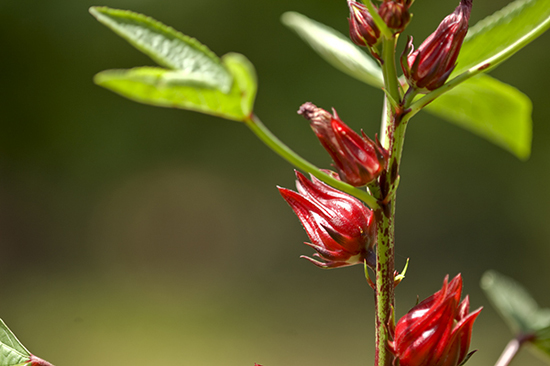
Of particular interest to researchers is Hibiscussabdariffa, dubbed as the Rosella plant by natives of the “land downunder.” This Old World favorite stems from Eurasia and Africa, where the leafis brewed and sold at wayside street markets and the fruit is incorporated intoa fragrant beer-soft drink combination known as Shandy. Setting culinary kudosaside, what’s really stirring a buzz in the scientific community is thehealth-giving compounds tucked away in each bud and leaf, namely anthocyaninsand protocatechuic acid.
Anthocyanins are bioflavonoids that lend the flowers andfruits of plants their vivid color. They are also considered phytonutrients. Infact, they possess potent antioxidant and anti-inflammatory properties and playa role in inhibiting the oxidation of low-density lipoproteins, the “taxi cabs”of LDL cholesterol (the bad kind). Protocatechuic acid also providesantioxidant activity. Studies have shown that this substance induces apoptosisin leukemia cells, which means that the cancer cells are stimulated toself-destruct.
Paired together, these powerful agents really pack a one-twopunch toward keeping you healthy. But, there are even more reasons thatresearchers are convinced that drinking hibiscus tea is a sweet idea.
Diabetes
Diabetes is a metabolic disorder that is associated withnumerous health complications, such as heart disease, neuropathy (nervedamage), blindness, and kidney failure. One of the primary reasons for this isa biochemical process known as glycation, the same mechanism that causes foodto brown in the oven. Glycation is triggered when glucose molecules bind toproteins, creating sugar-damaged proteins known as advanced glycationendproducts (AGEs). Elevated levels of AGEsincrease free radical levels and lower levels of nitric oxide, which leads tomore damaged proteins and compromised arteries, nerves, and organs. These roguesugar molecules also attach themselves to LDL molecules on their way back tothe liver for disposal, which prevents them from binding to receptor sites.This molecular hijacking causes the liver to mistakenly conclude that there’s ashortage of cholesterol, so it produces more.
In March and April of 2009, researchers at two differentuniversities in Taiwan set out to examine the impact of hibiscus on thesedevastating diabetes-related effects. They not only found that the botanicalsuppressed AGE activity, but also increased the function of glutathione, a typeof amino acid necessary for healthy cellular metabolism and immune response. Inaddition, the researchers found that hibiscus offered protection to vascularsmooth muscle cells from oxidative stress. Nigerian researchers at theDepartment of Biochemistry, College of Medicine, University of Ibadanexperienced similar findings in a 2007 study. In fact, to quote the abstractpublished in Fundamental Clinical Pharmacology, “…Hibiscus sabdariffa could beuseful in preventing the development of atherosclerosis and possible relatedcardiovascular pathologies associated with diabetes.”
High Blood Pressure
In November of 2008, the results of a clinical trial thatfocused on the anti-hypertension effects of hibiscus were presented at theannual conference of the American Heart Association. The study, which wassponsored by the Agricultural Research Service of the U.S. Department ofAgriculture, involved 65 adults between the ages of 30 and 70 years with mildhypertension or at borderline risk for hypertension. After six weeks, thetea-tipping subjects experienced a decrease in systolic blood pressure by 7.2points, compared to 1.3 points in the placebo group. The researchers also foundthat those with the highest systolic blood pressure achieved the mostimpressive results, with an average decrease in systolic blood pressure of 13.2 points and a reduction in diastolic bloodpressure of 6.4 points.
Earlier studies havereported similar results. For example, a 1999 study completed by the ShaheedBeheshti University of Medical Sciences and Health Services in Iran noted an11.2% reduction in systolic blood pressure and 10.7% diastolic pressure afteronly 12 days of treatment with hibiscus tea.
High Cholesterol
As previously mentioned, oxidative stress and the excessiveproduction of AGEs lowers nitric oxide levels. How is this related to cholesteroland its role in heart disease? Well, nitric oxide is nicknamed “endothelium-derived relaxingfactor,” which basically means it is essential for healthy vascular function ofspecialized cells found in the inner lining of the arteries. In fact, nitric oxideis necessary to prevent atheriosclerosis, a condition characterized bythe accumulation of lipoproteins and platelets that form arterial plaque.Hibiscus has been shown to prevent premature nitric oxide depletion byinhibiting harmful AGEs.
Oxidized LDL is also involved in the formation of arterial plaque. A studypublished in the journal Chemico-Biological Interactions on May 15, 2009reported that hibiscus decreased oxidized LDL as well as regulating CD36 geneexpression, which is responsible for encoding a specialized protein to bindwith oxidized LDL and other substances that contribute to platelet aggregation,such as thrombospondin.
Drink Up!
Fortunately, you don’t have to read the soggy hibiscustealeaves at the bottom of your cup to know that it overflows with good health.You don’t have to be a biochemist either. But it may help to remember thehealth benefits of hibiscus by committing to memory the ancient custom ofpresenting the flowers as an offering to Kali, the Tantric Goddess of time andchange. According to Hindu belief, it was she who claimed victory in a warbetween the Gods and the demons of the self-awareness—fear, addiction, doubt,self-inflicted illness, etc. Perhaps by drawing on the attributes of hibiscus,the Mother Goddess was inspired to destroy the darkness that would keep hersubjects from living in the light.
References:
-
Huang CN, Chan KC, Lin WT, et al. Hibiscus sabdariffa inhibits vascular smooth muscle cell proliferation and migration induced by high glucose--a mechanism involves connective tissue growth factor signals. J Agric Food Chem. 2009 Apr 22;57(8):3073-9.
-
Lee WC, Wang CJ, Chen YH, et al. Polyphenol extracts from Hibiscus sabdariffa Linnaeus attenuate nephropathy in experimental type 1 diabetes. J Agric Food Chem. 2009 Mar 25;57(6):2206-10.
-
Kao ES, Hsu JD, Wang CJ, et al. Polyphenols extracted from Hibiscus sabdariffa L. inhibited lipopolysaccharide-induced inflammation by improving antioxidative conditions and regulating cyclooxygenase-2 expression. Biosci Biotechnol Biochem. 2009 Feb;73(2):385-90. Epub 2009 Feb 7.
-
Kao ES, Tseng TH, Lee HJ, et al. Anthocyanin extracted from Hibiscus attenuate oxidized LDL-mediated foam cell formation involving regulation of CD36 gene. Chem Biol Interact. 2009 May 15;179(2-3):212-8.
-
Ochani PC, D'Mello P. Antioxidant and antihyperlipidemic activity of Hibiscus sabdariffa Linn. leaves and calyces extracts in rats. Indian J Exp Biol. 2009 Apr;47(4):276-82.
-
Mozaffari-Khosravi H, Jalali-Khanabadi BA, Afkhami-Ardekani M, Fatehi F, Noori-Shadkam M. The effects of sour tea (Hibiscus sabdariffa) on hypertension in patients with type II diabetes. J Hum Hypertens. 2009
-
American Heart Association Scientific Session 2008, New Orleans, Nov. 8-12, 2008.
-
Farombi EO, Ige OO. Hypolipidemic and antioxidant effects of ethanolic extract from dried calyx of Hibiscus sabdariffa in alloxan-induced diabetic rats. Fundam Clin Pharmacol. 2007 Dec;21(6):601-9.
-
Carvajal-Zarrabal O, Waliszewski SM, Barradas-Dermitz DM, et al. The consumption of Hibiscus sabdariffa dried calyx ethanolic extract reduced lipid profile in rats. Plant Foods Hum Nutr. 2005 Dec;60(4):153-9.
-
Farombi EO, Fakoya A. Free radical scavenging and antigenotoxic activities of natural phenolic compounds in dried flowers of Hibiscus sabdariffa L. Mol Nutr Food Res. 2005 Dec;49(12):1120-8.
-
Haji Faraji M, Haji Tarkhani A. The effect of sour tea (Hibiscus sabdariffa) on essential hypertension. J Ethnopharmacol. 1999 Jun;65(3):231-6.
Buy bulk hibiscus
Buy Hibiscus tea bags
Hibiscus mint tea