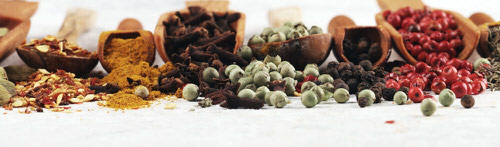
cardamom flavor notes
warm, pungent and slightly lemony with low notes of sweetness
cardamom culinary uses
Cardamom is a member of the ginger family known for its unique flavor
and aroma, which can be described as smoky, floral, citrus and sweet—all
at the same time.
Many traditional Indian dishes feature different varieties of cardamom.
Elettaria, or green cardamom, is combined with condensed milk and sugar
to make sweets collectively referred to as mithai. Green cardamom is
also used to flavor coffee and teas, most notably Masala chai.
Since culinary connoisseurs consider green cardamon the premium variety, it
is commonly used to flavor meats, poultry, seafood, vegetable dishes,
soups and sauces. In contrast, Amomum, or black cardamom, imparts a
slightly mint-like flavor and is an ingredient in garam masala, a
seasoning blend used to flavor curries and rice dishes.
one more fun use
Due to the cool sensation
black cardamon leaves on the tongue, it is
included in the formula for
Eclipse Breeze, a breath-freshening gum.
traditional plant usage
three cups of coffee
The spice is also a constituent in gahwa, a festive coffee blend that
has become recognized as a symbol of hospitality in Indian households.
Should you find yourself fortunate enough to be offered this treat, be
aware that it is considered rude to refuse anything less than three cups.
farming and processing
Cardamom is a member of the ginger family known for its unique flavor and
aroma, which can be described as smoky, floral, citrus and sweet—all at the
same time. A native of India and Malaysia, cardamom is harvested in October,
and the whole pods are dried in the sun or in curing houses and then sorted
according to color.
Common cardamom, or Elettaria cardamomum, ranges from green to yellow-gray in
color. The fruit of other species, however, may be brown, black, red or even
white. The flavor of all cardamoms is best preserved when stored as whole
pods since the seeds remain intact, although the pods are also ground into a
spice. You can also purchase the seeds, which are sold as
"decorticated cardamom."
Formulas & recipes
The pods of a cardamom plant each contain three seeds, which add a warm, sweet flavor to teas, pastries, curries, and more. Masala chai is a popular tea in which cardamom is added. Interestingly, cardamom used to be used to sweeten breath and clean teeth, but now the herb is mostly used as a modern, complex spice
Masala chai tea recipe
Ingredients:
-6-8 green cardamom pods
-4 whole cloves
-5 peppercorns
-1 cup water
-5 slices of ginger (skins on)
-½ cinnamon stick
-2 tablespoons loose leaf black tea
-1 cup almond milk (or milk of choice)
-3 teaspoons sugar
First, collect all the spices listed and crush them using a mortar and pestle, or food processor. Crush them into slightly smaller pieces. Using a small pot, bring the cup of water to a boil on medium-high heat. Add the spices, ginger, along with the black tea leaves. Bring this mixture to a simmer for about 2 minutes before turning down the heat and add the milk to the pot. Now bring the pot to a boil once again, let the chai get bubbly, and then take it off the heat quickly until the bubbles go down. Repeat this process once more, letting the mixture come to a boil again and lifting it off the heat until the bubbles die down. Simmer the chai after the second boil, until it is of uniform color and consistency. Strain the mixture using a fine-mesh strainer, then add the sugar and enjoy hot or iced.